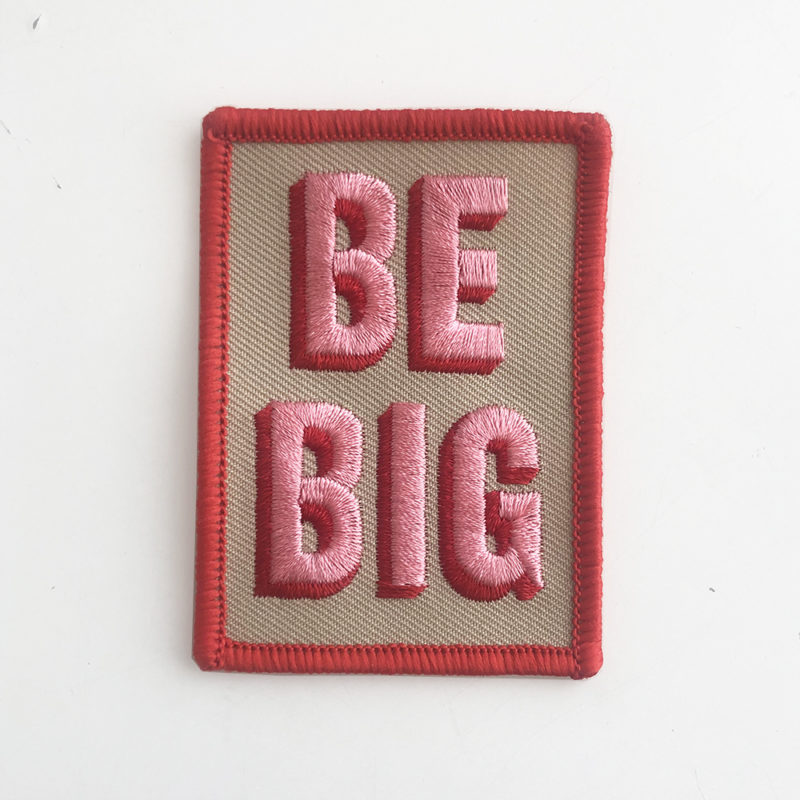
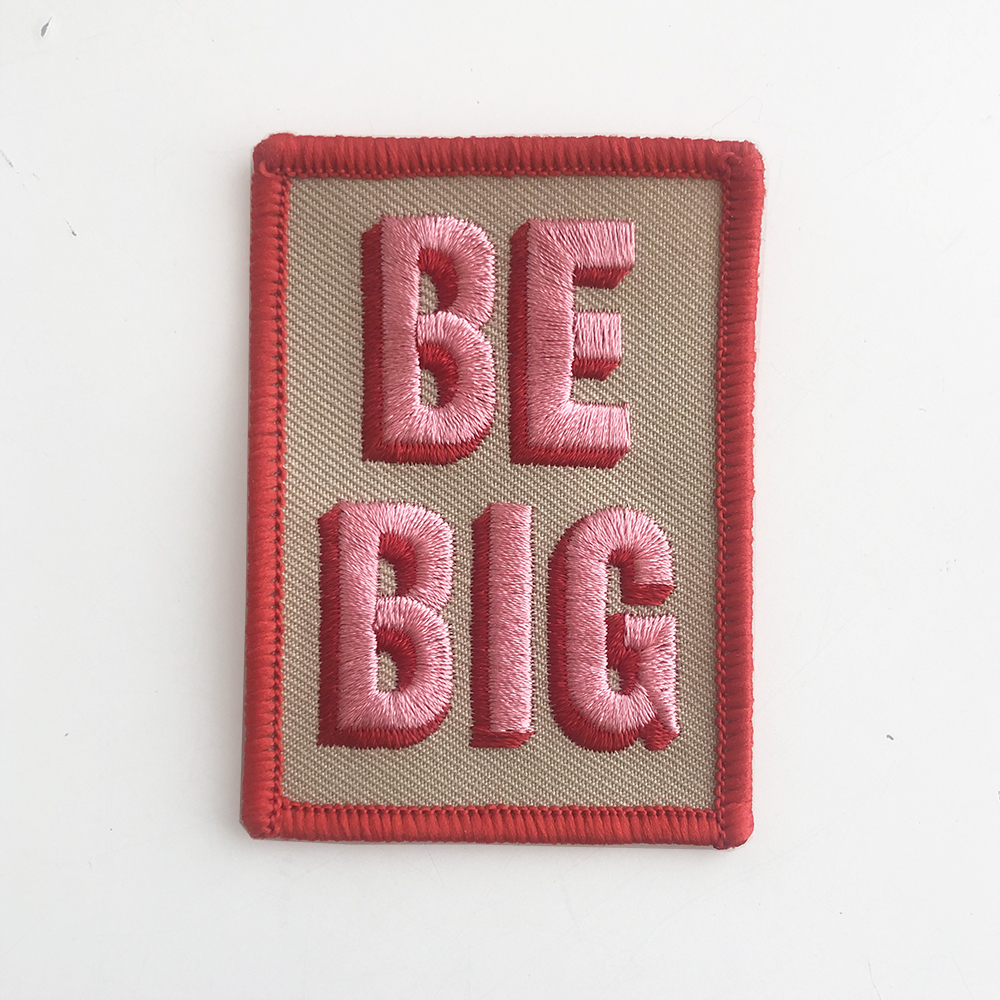
After the success of Dave Buonaguidi's 'Be Big' limited edition print edition Dave has produced his bold and brash type into an embroidered badge Badge size: 5 x 7cm *Please...
After the success of Dave Buonaguidi's 'Be Big' limited edition print edition
Dave has produced his bold and brash type into an embroidered badge
Badge size: 5 x 7cm
*Please note* THIS IS NOT A SCREEN PRINTED PIECE OF ART
ABOUT THE ARTIST
Dave Buonaguidi
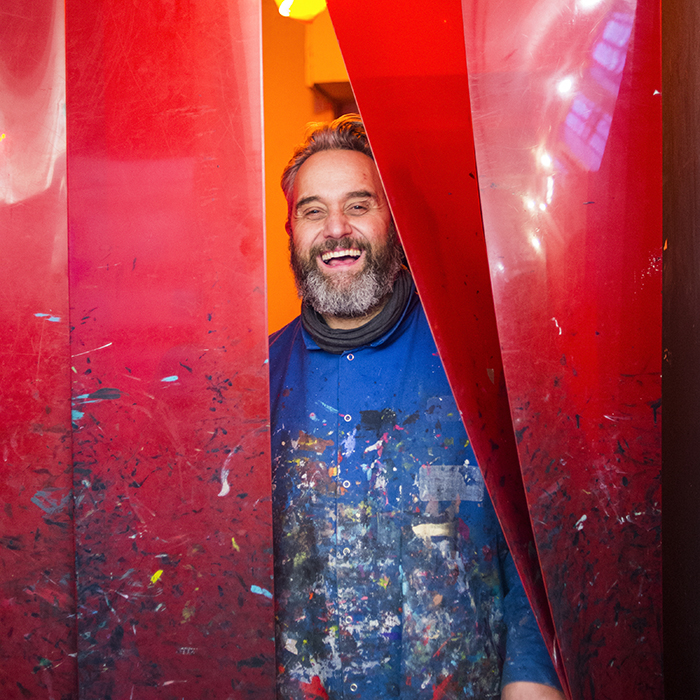
Dave Buonaguidi, better known as Real Hackney Dave, spent over three decades building a reputation in advertising before art entered the picture at all. He co-founded St Luke’s, the world’s first co-operative ad agency, launched Karmarama in 2000, and later served as Creative Director at Channel 4, the kind of career most people would call finished rather than a prelude.
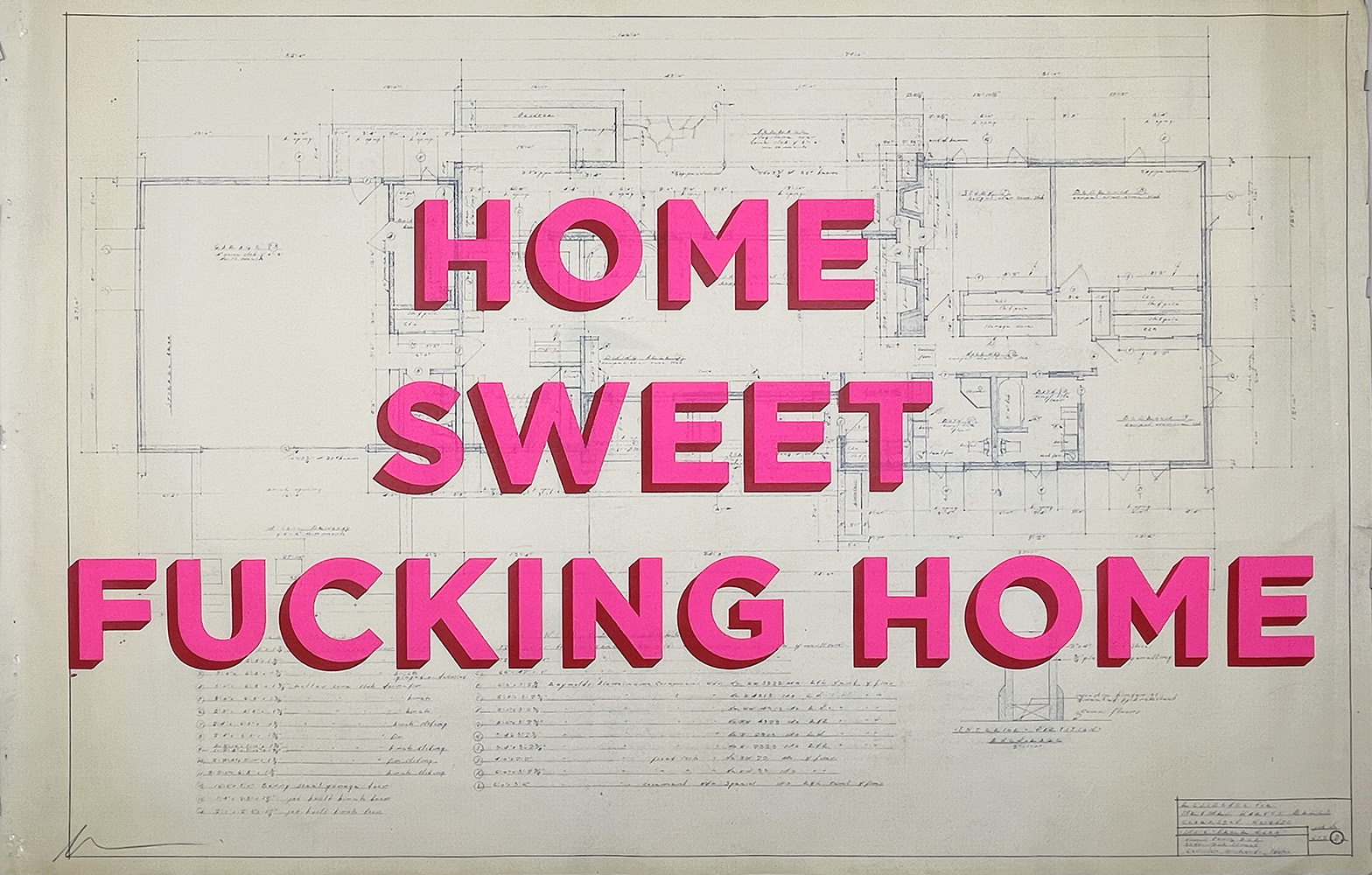
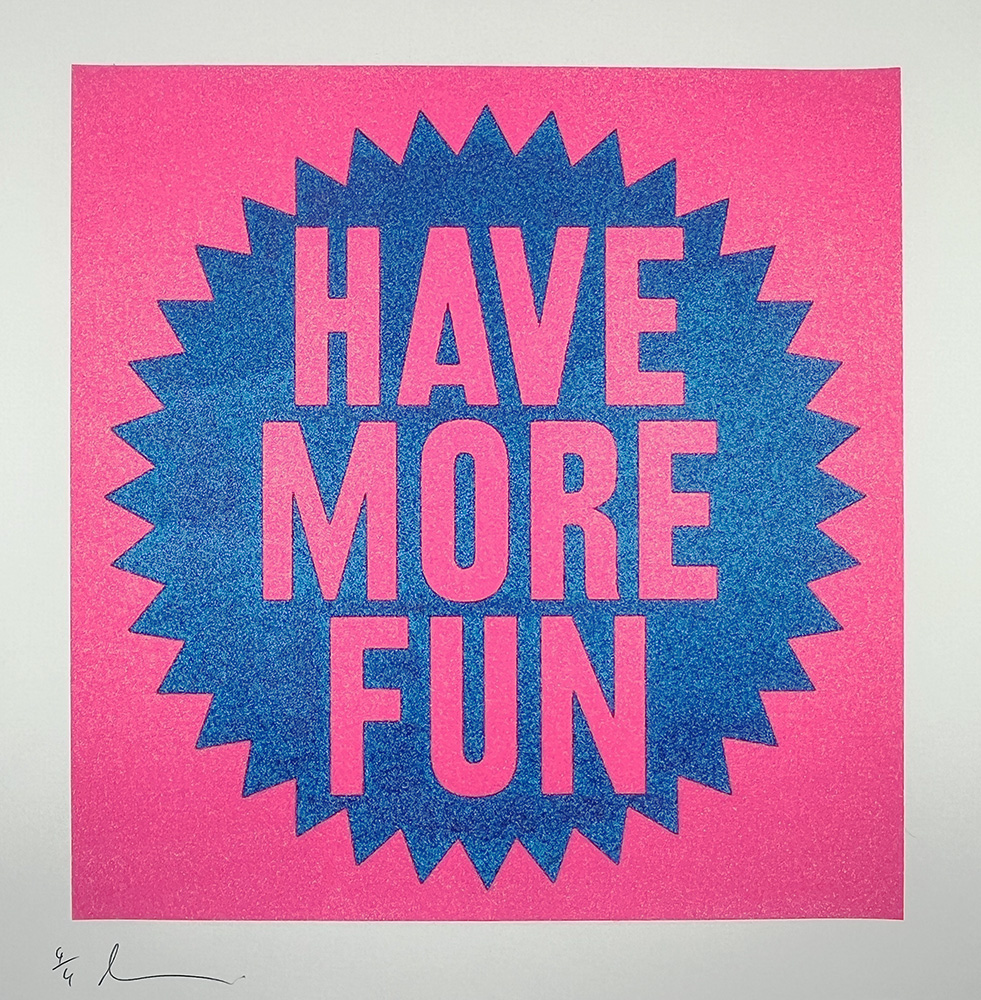
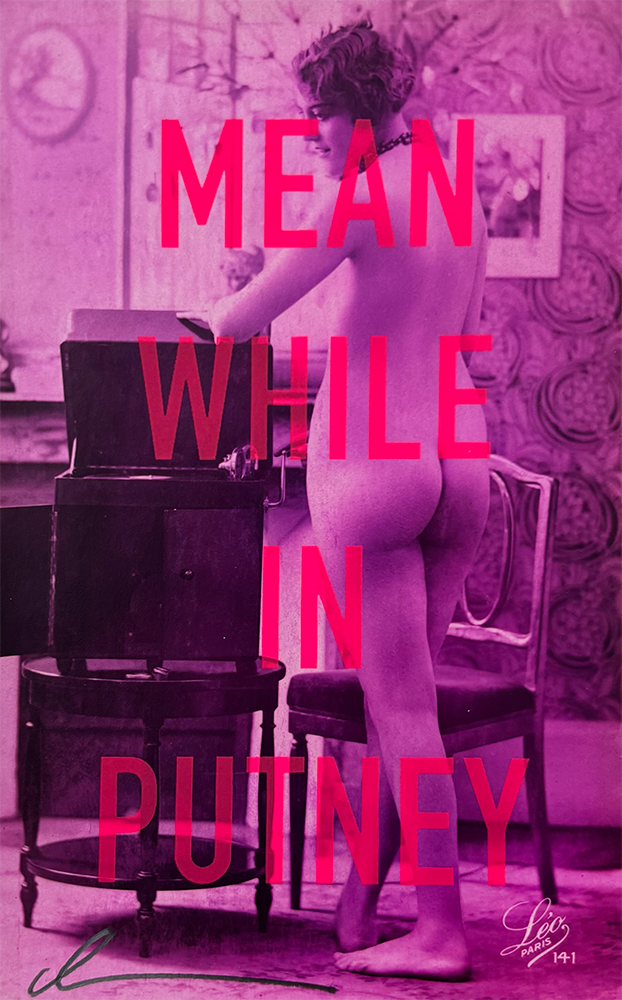
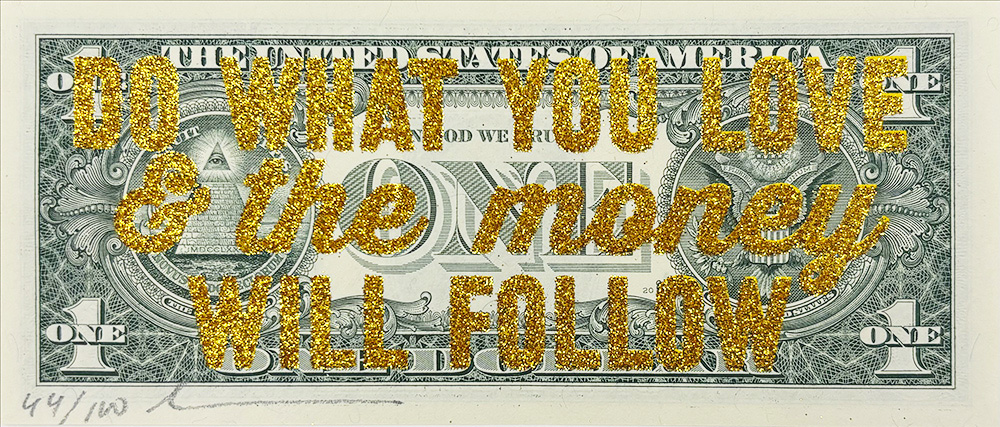
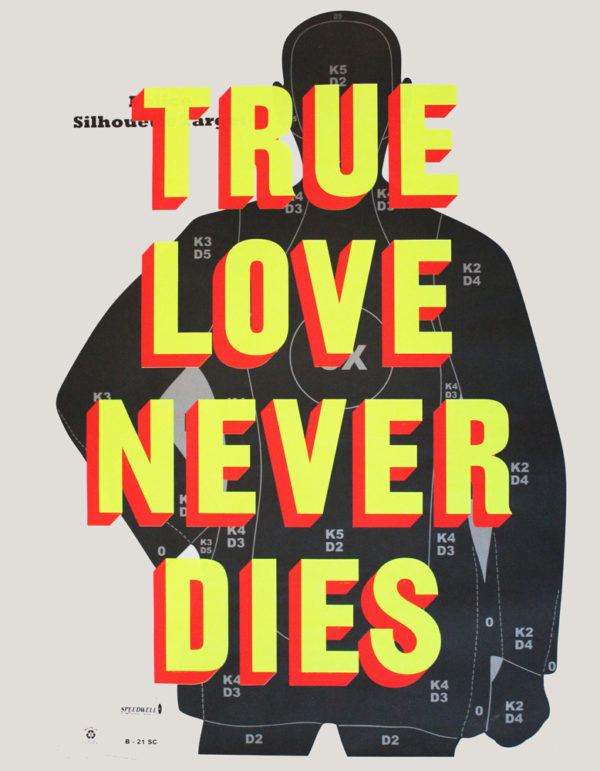
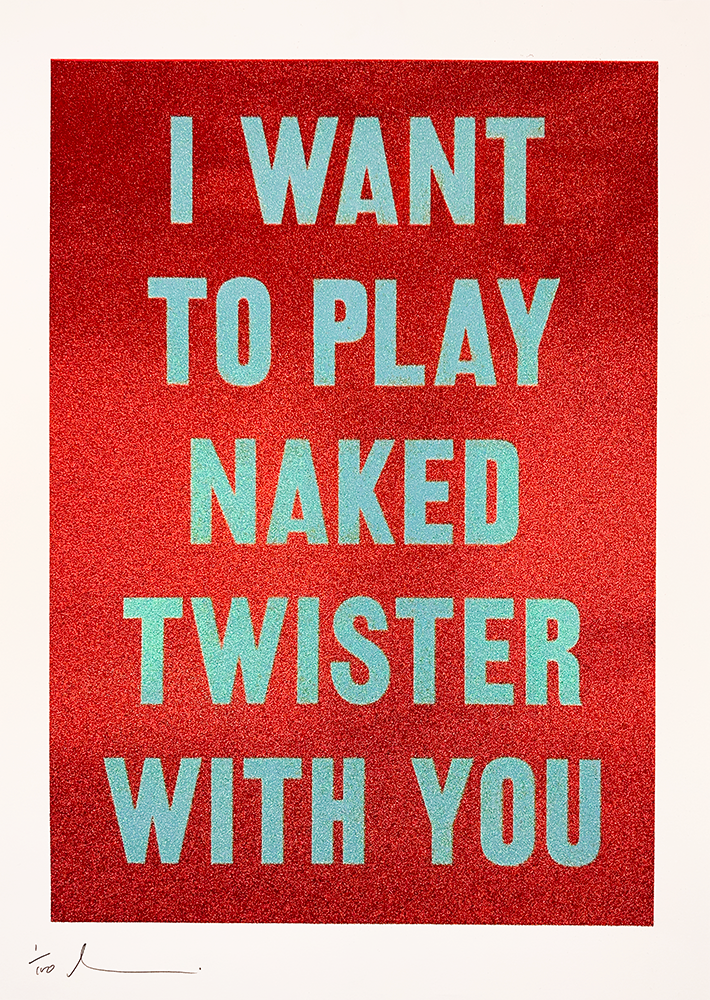
Then, at fifty, he signed up for a one-day screen printing workshop at Print Club London, and that single session is where his life as an artist actually started. He’s been open about how unexpectedly significant it was, describing it as having changed his path entirely. He left advertising behind for good not long after, and now works from his studio in Hackney Wick, screen printing bold, often fluorescent typography onto vintage maps, blueprints, copper plates and other found ephemera.
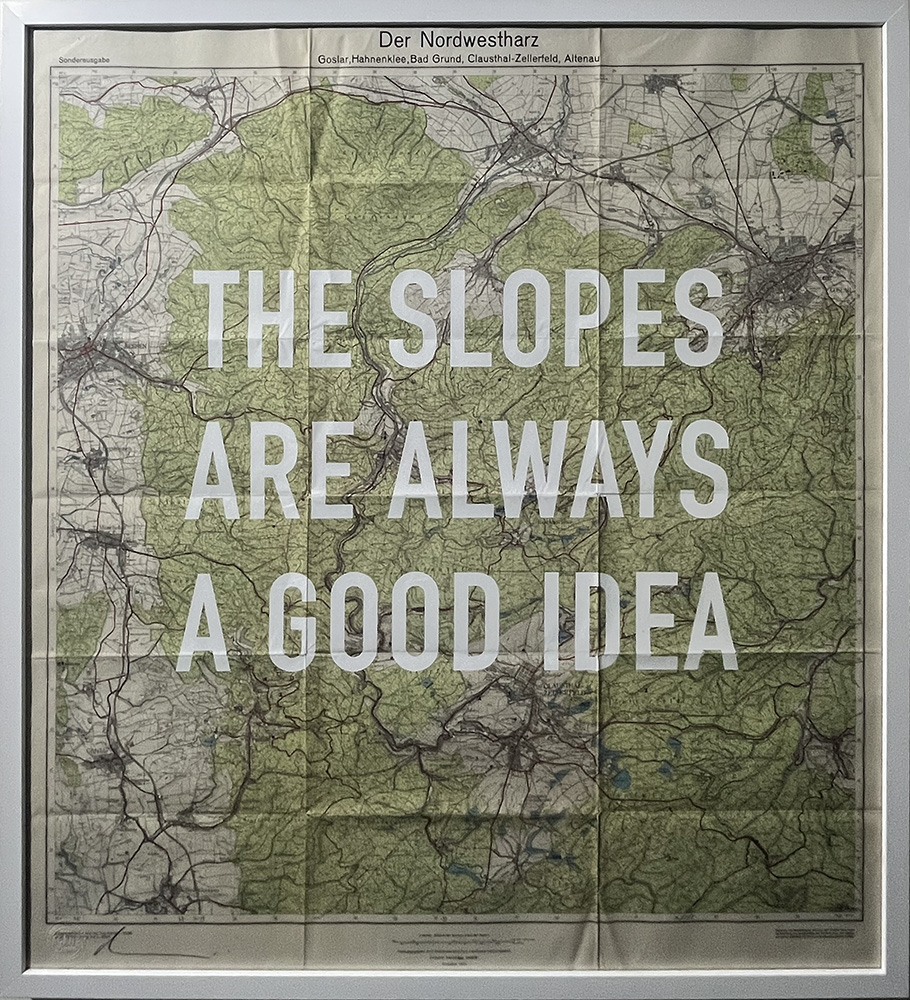
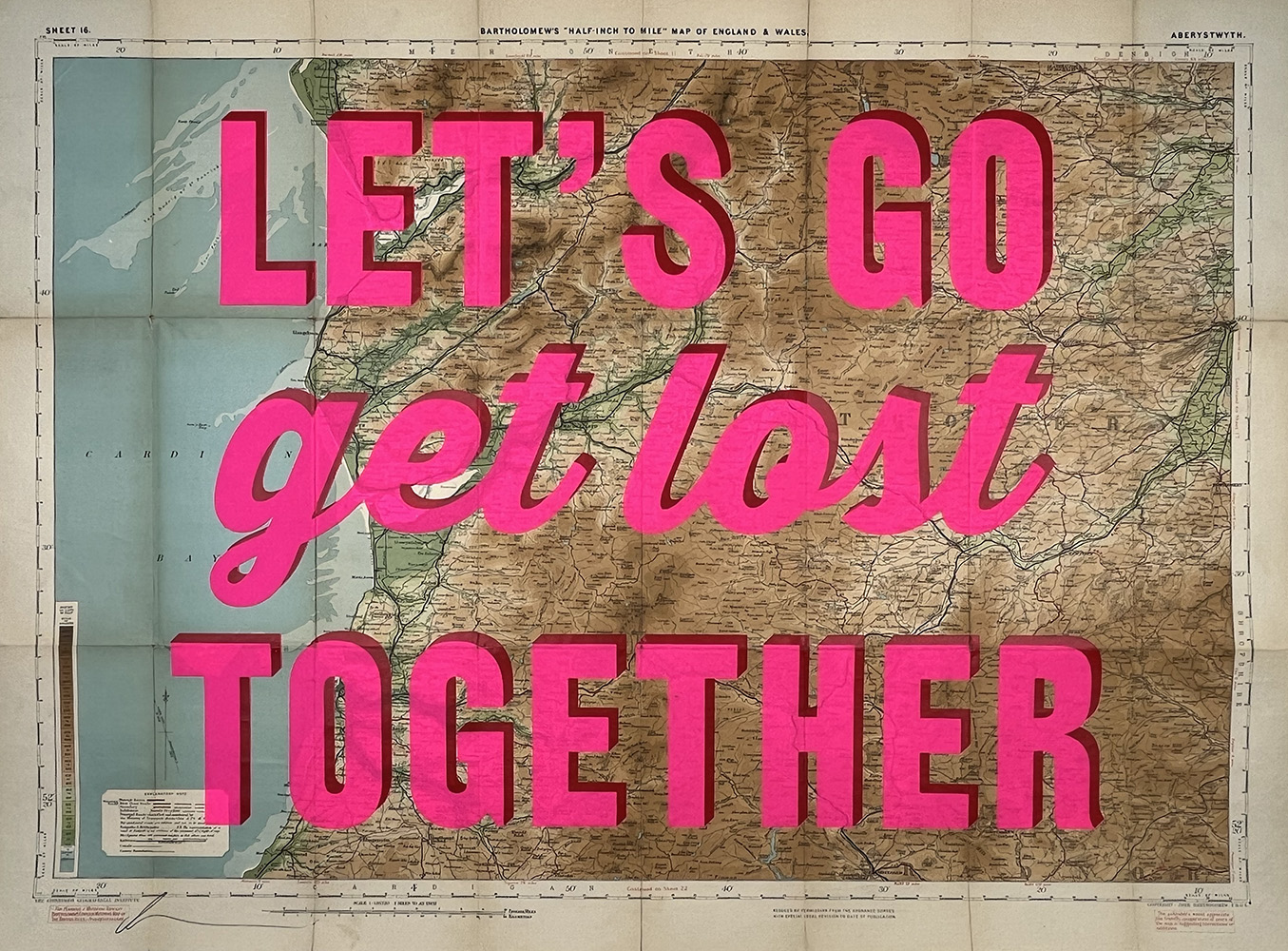
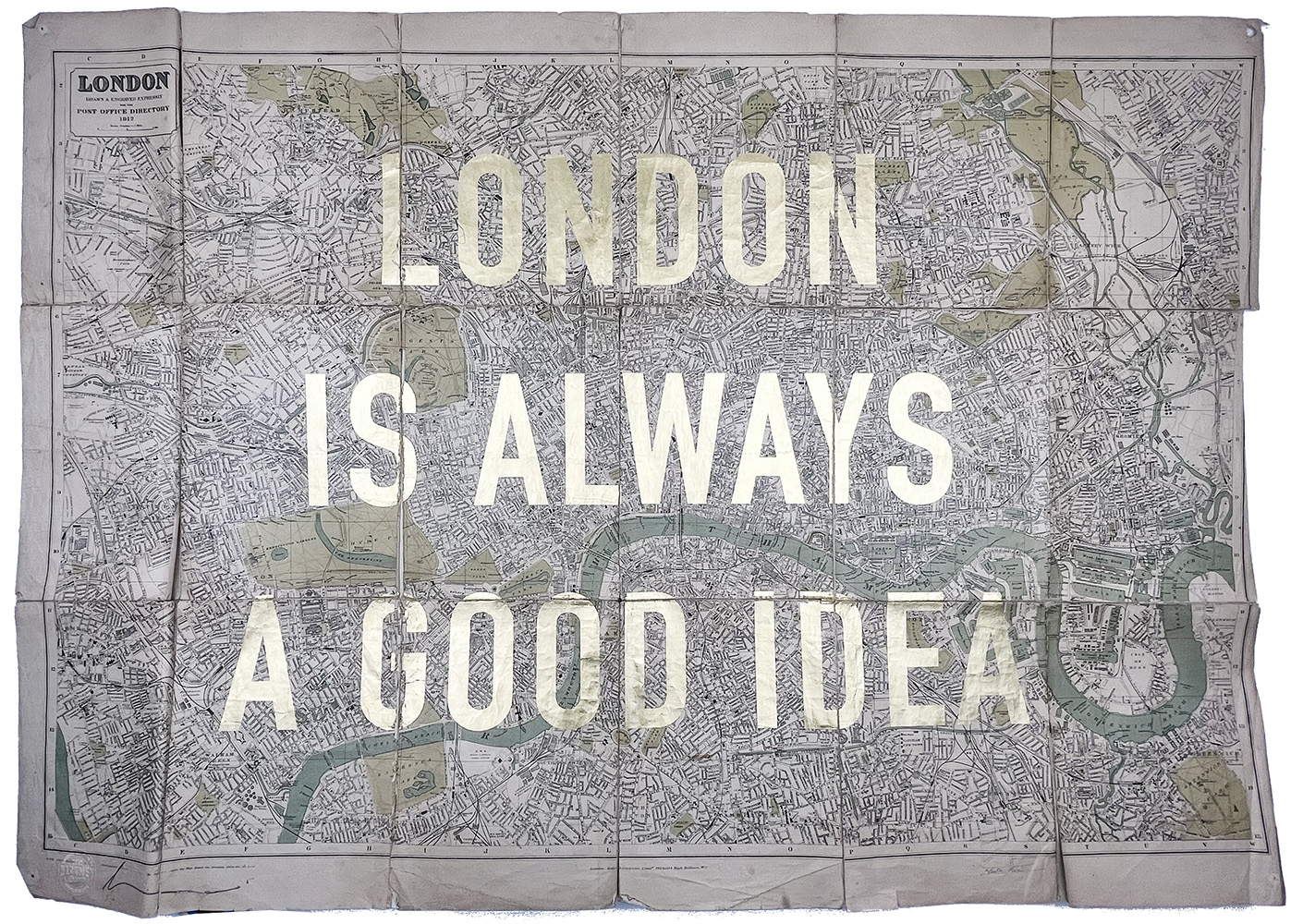
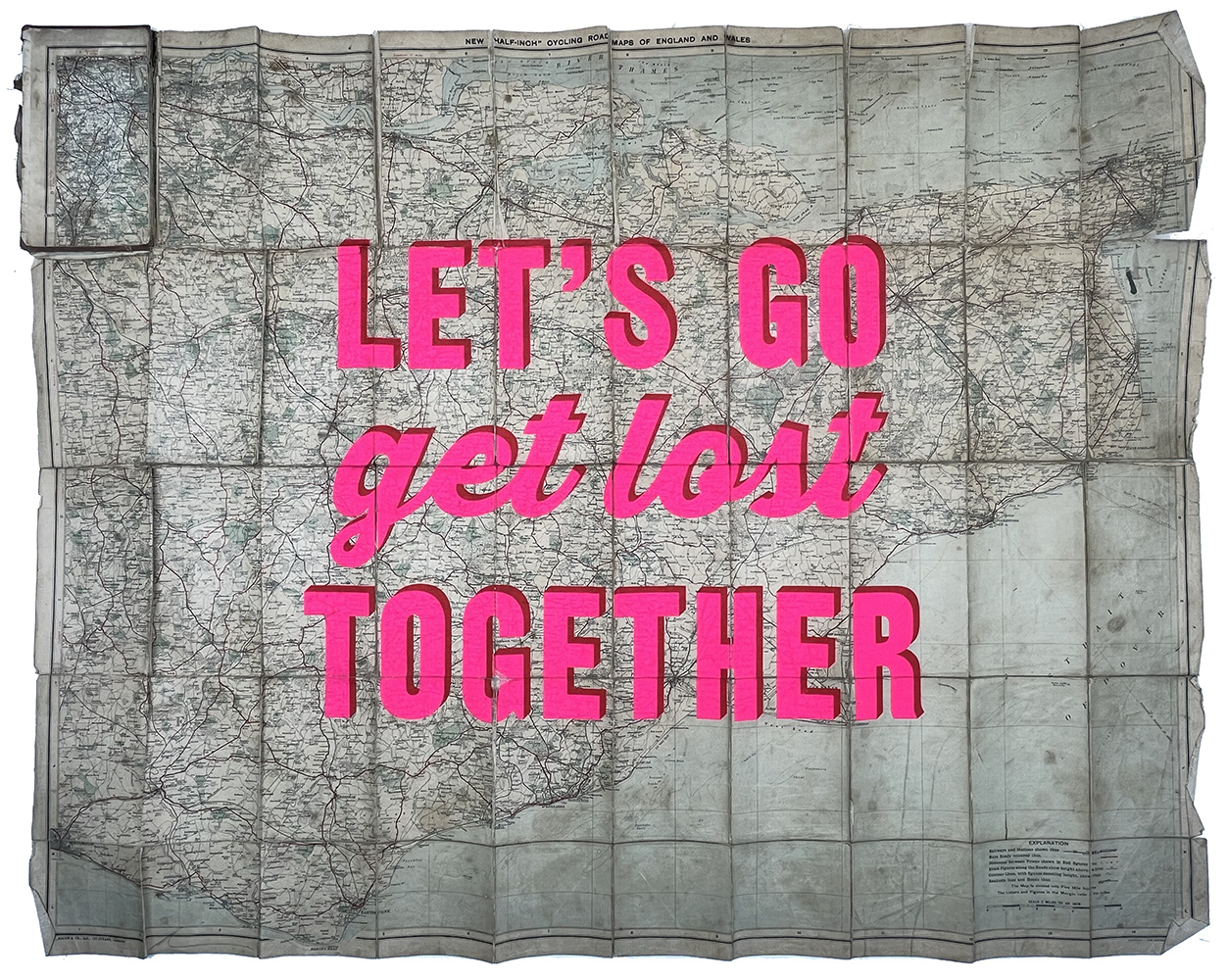
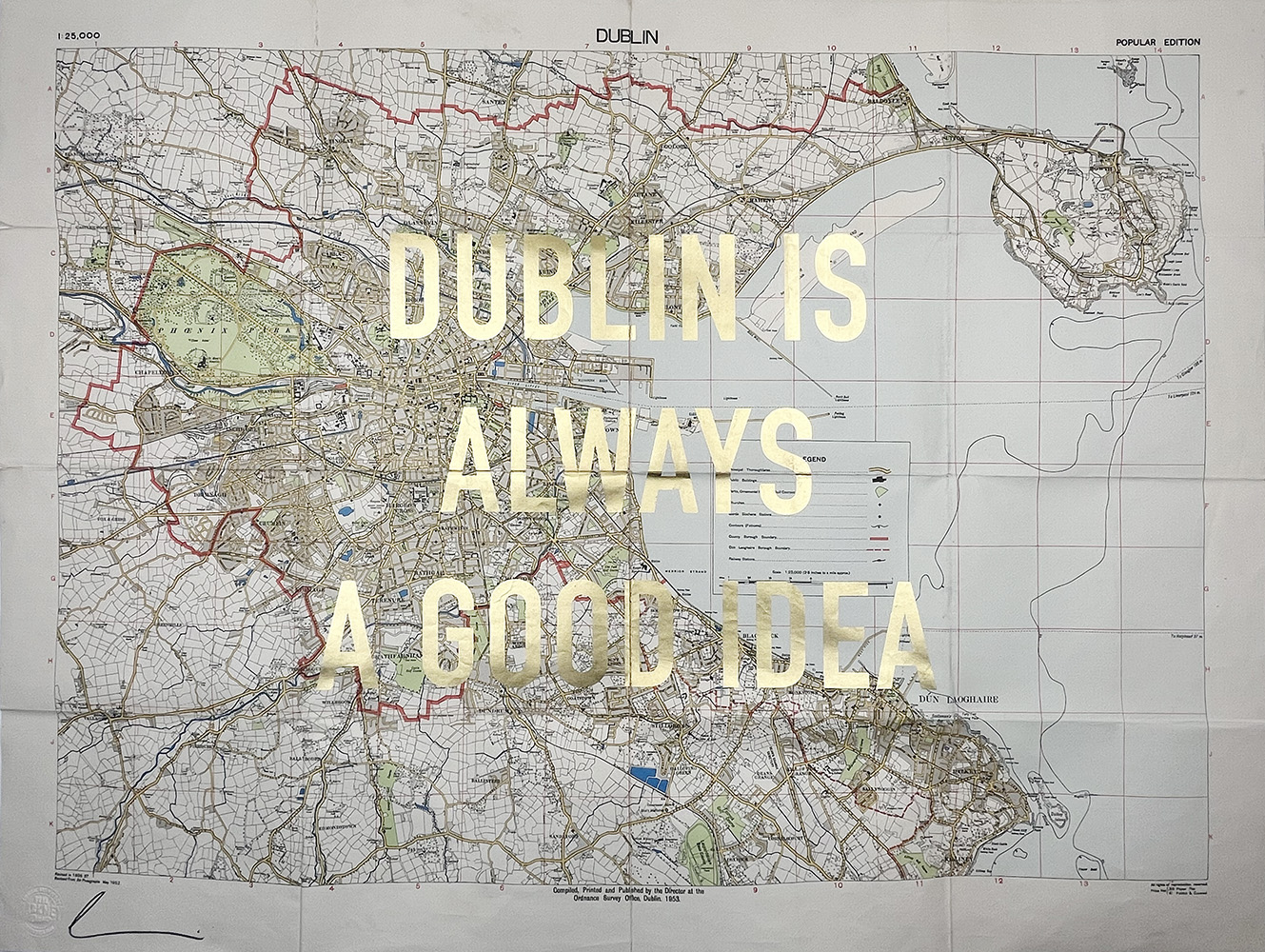
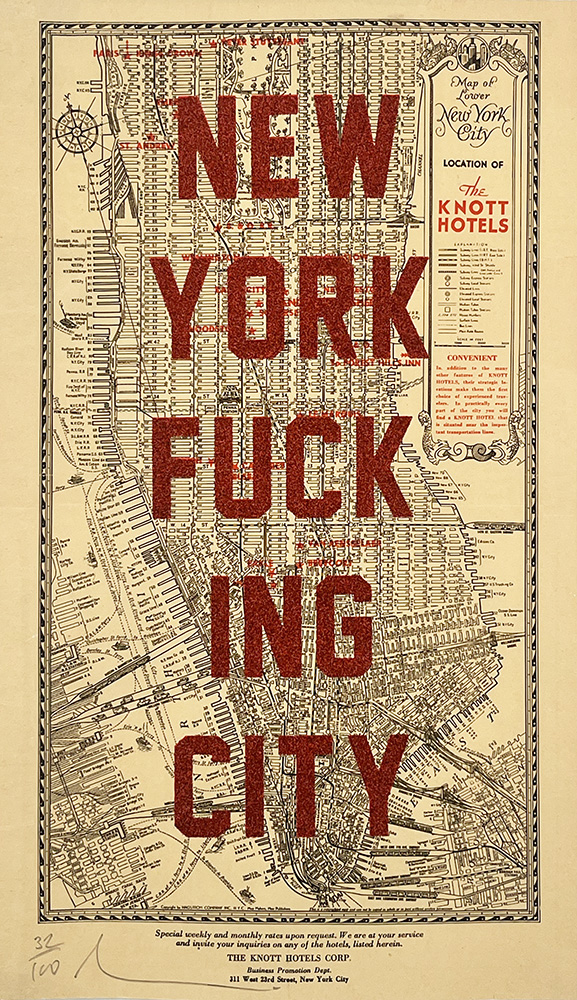
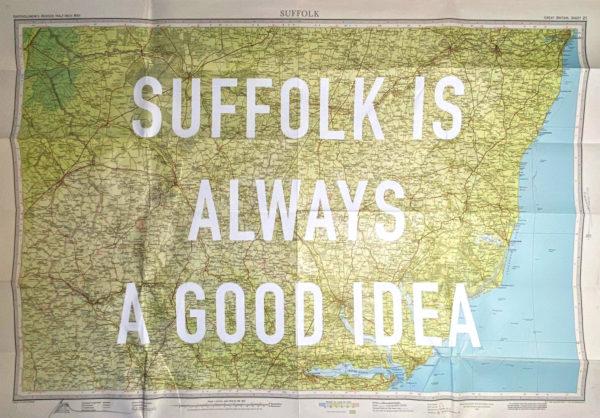
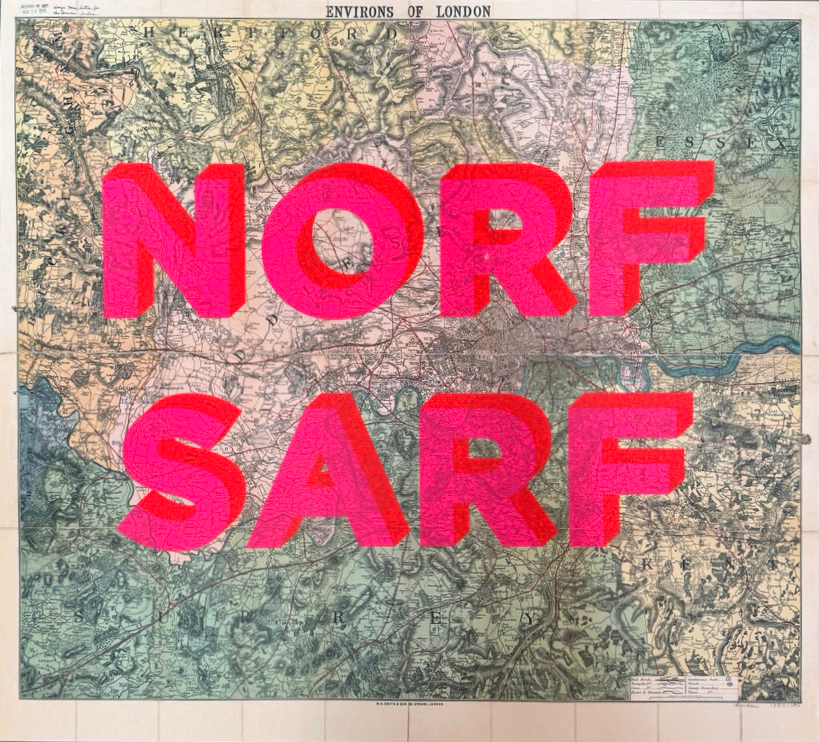
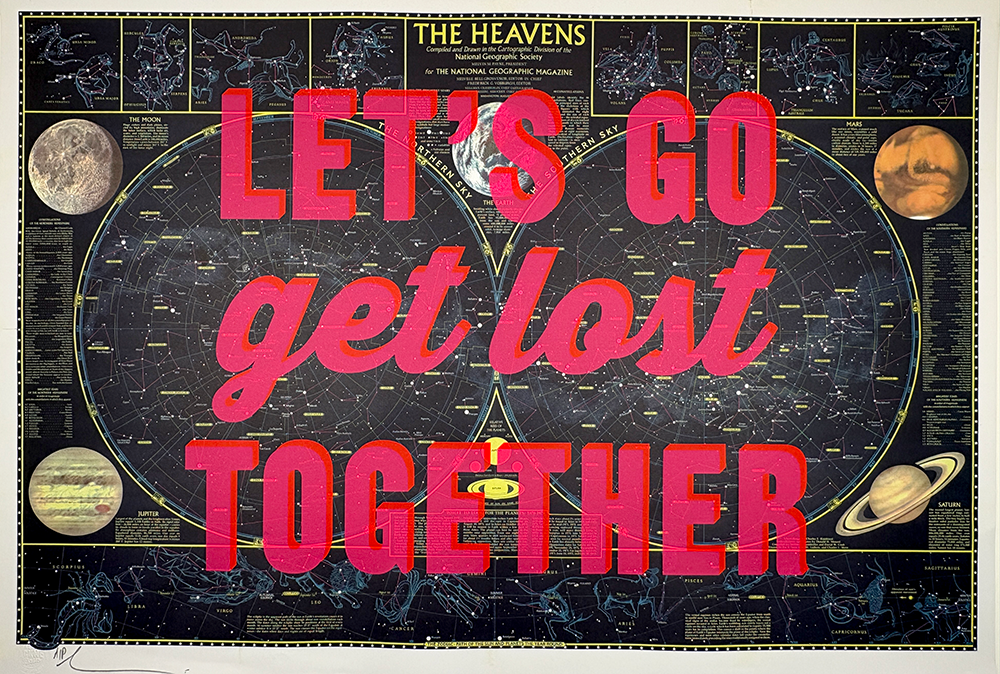
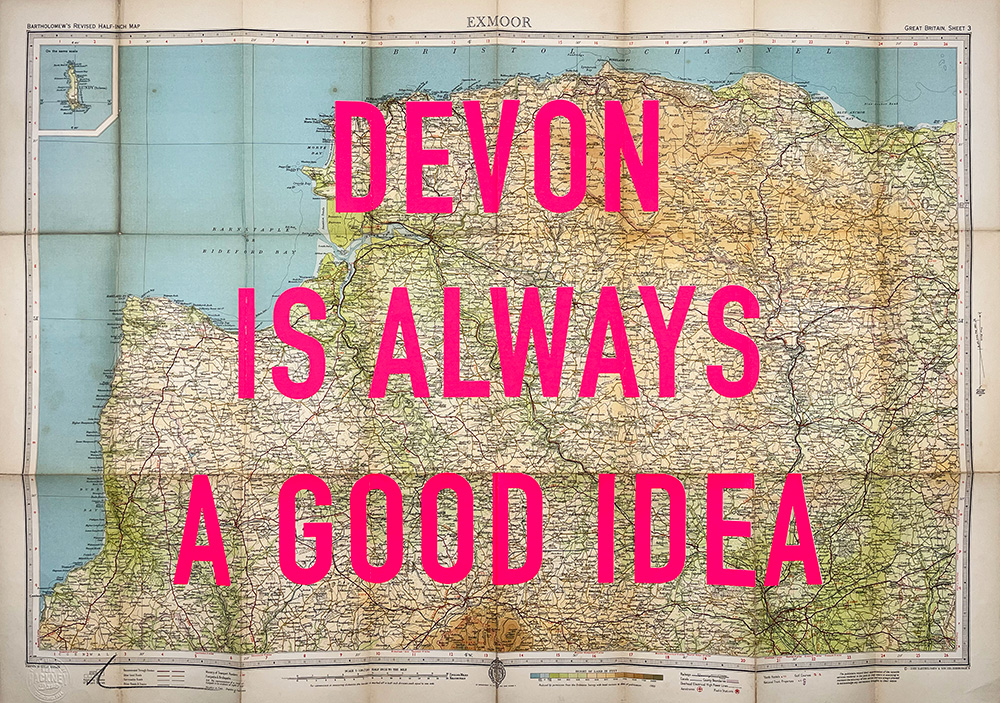
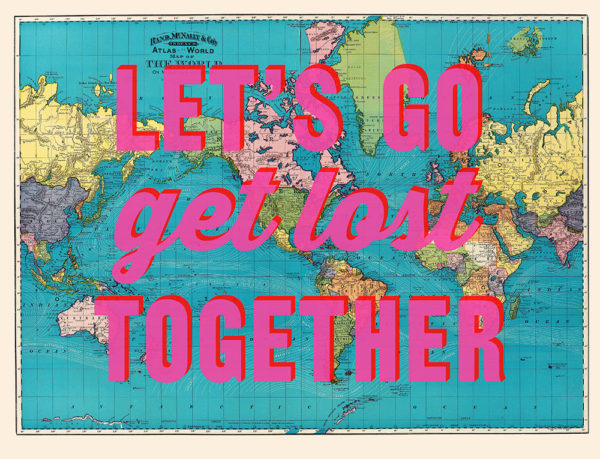
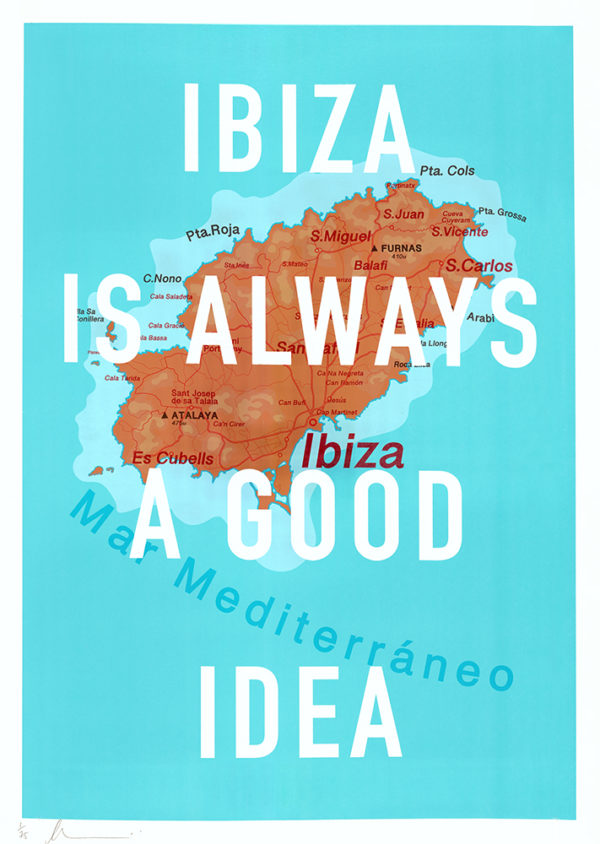
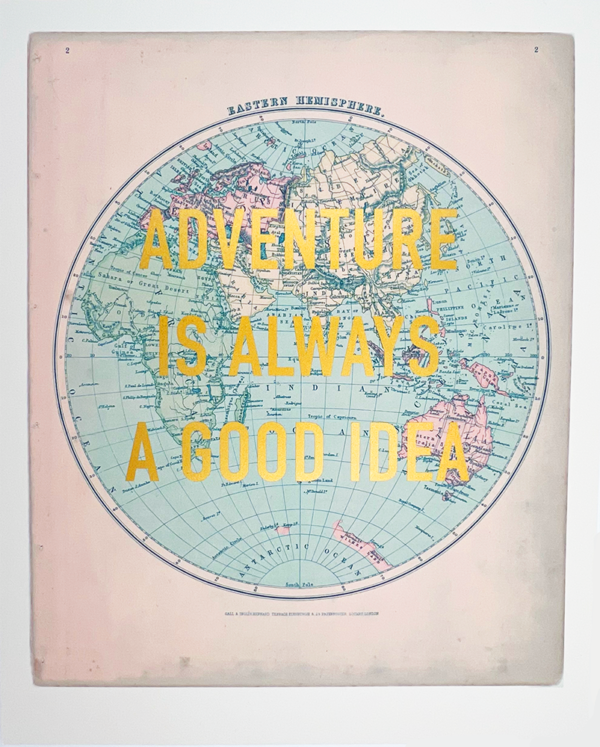
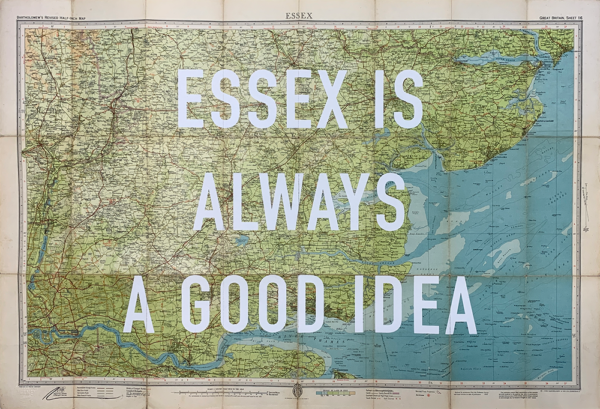
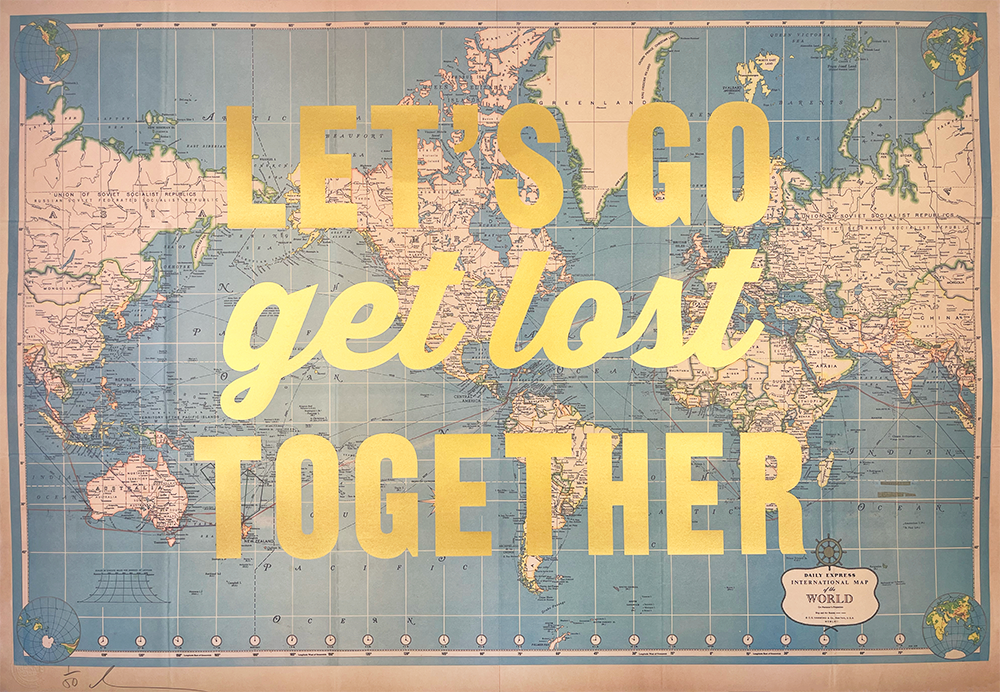
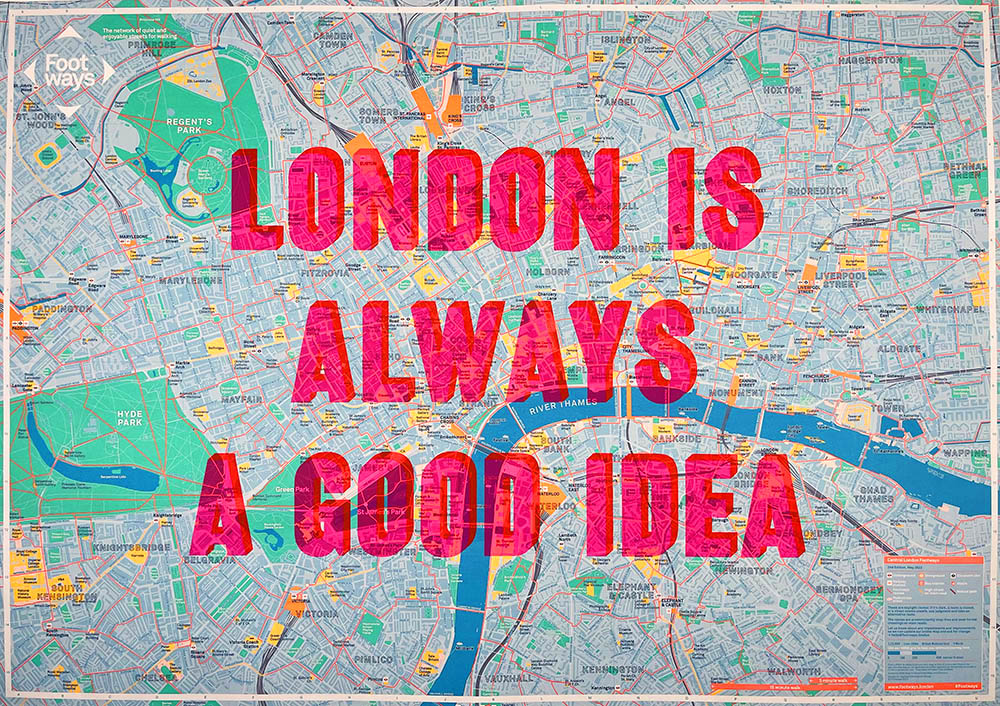
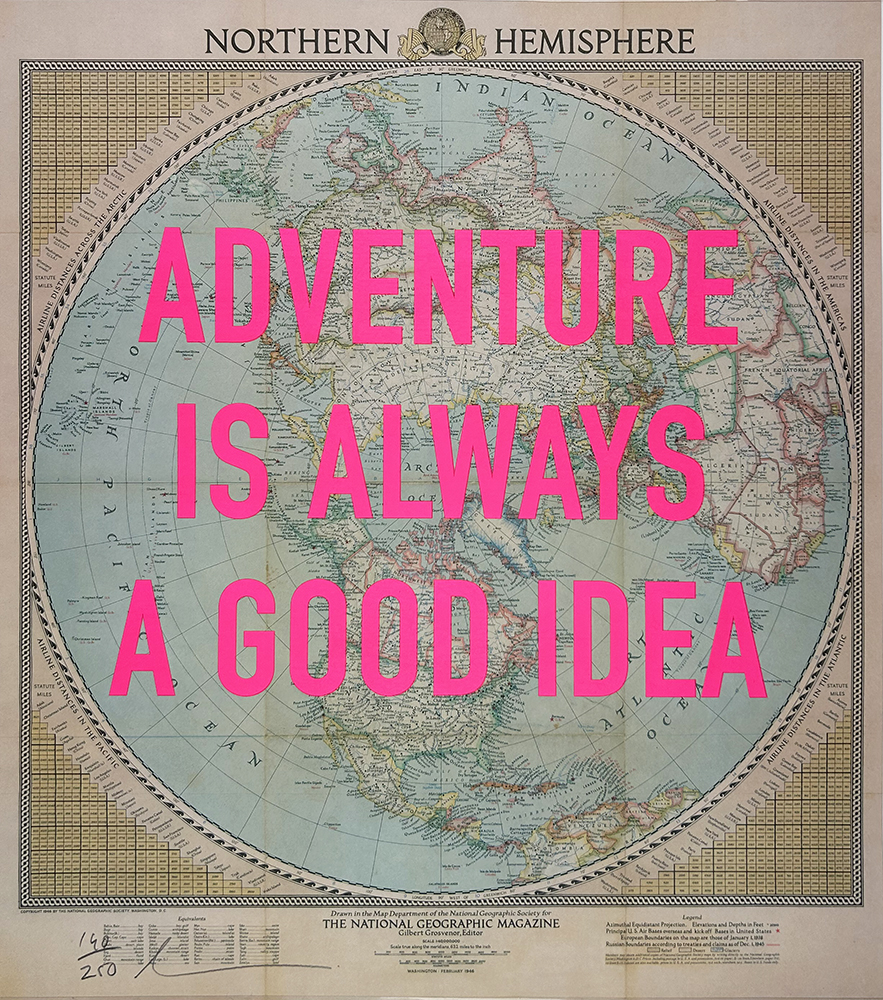
That map-based work has become some of his most recognisable, taking old, often well-worn charts of cities, counties and coastlines and overprinting them with blunt, funny, sometimes filthy one-liners, the kind of pieces that read like a postcard written by someone who’s seen it all. Series like Let’s Go Get Lost Together and his run of “Is Always A Good Idea” prints, covering everywhere from Suffolk to Ibiza, sit somewhere between travel ephemera and protest poster, repurposing the visual language of advertising he spent decades mastering for something far more personal.
His earlier, most widely known piece, the MAKE TEA NOT WAR poster created for the 2003 anti-war march, now sits in the V&A’s collection and hangs in Trento’s museum of modern art. But it’s the studio-based, map-driven work he makes today that defines him as an artist, and it all traces back to that first Print Club London workshop.